
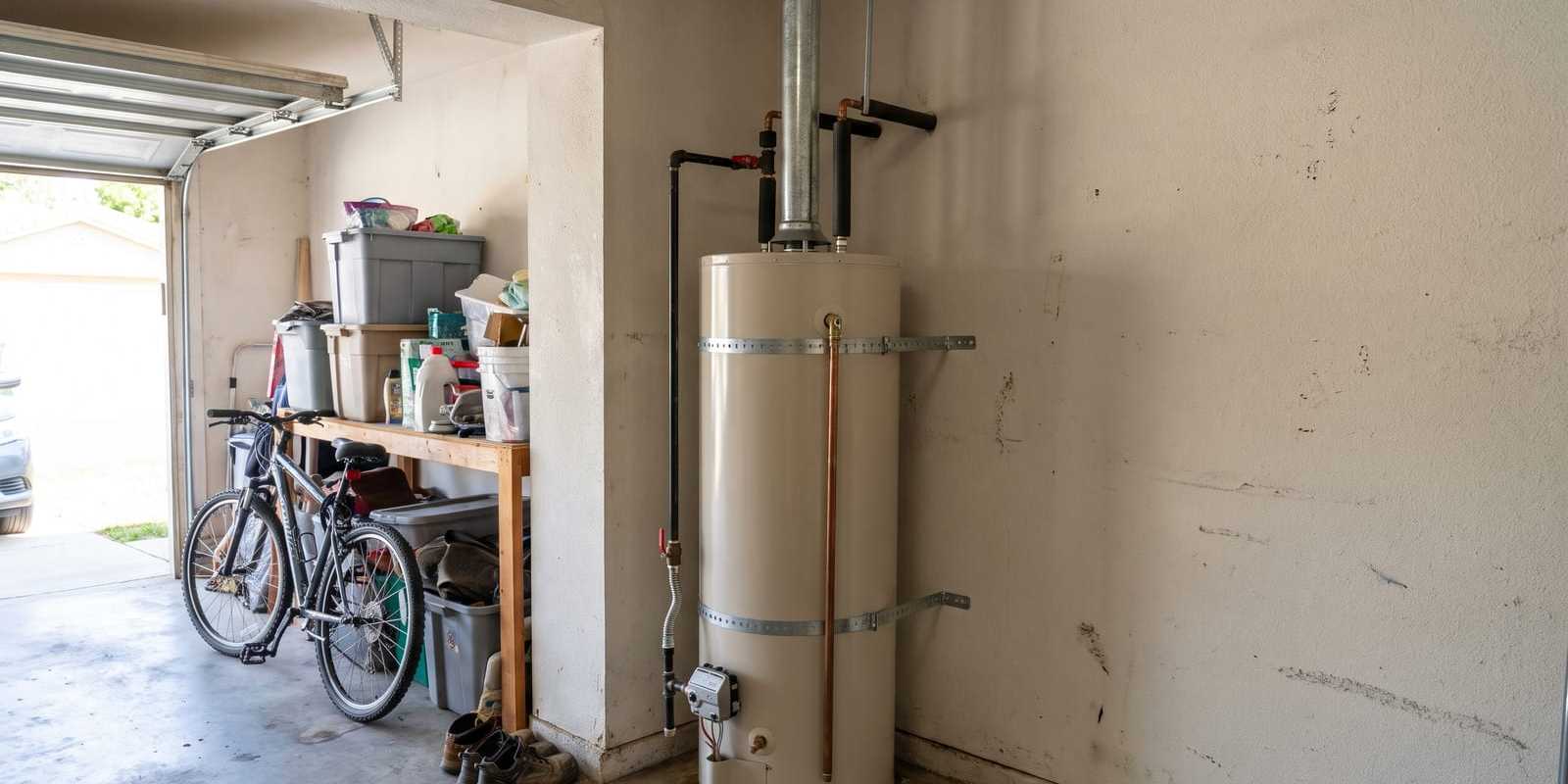
Cold showers start with one of a few things: the heat source, the tank or the controls. Plenty of water heater calls end with a repair, a new thermocouple, element, thermostat or relief valve, and the heater runs for years more. When the tank itself is leaking or rusting through, the answer is a new heater, and that is the moment to decide between a tank and a tankless unit.
Phil Peterson Plumbing installs both kinds, and corrects the thermal expansion problems that show up when a home’s water system is closed off by a pressure regulator or a check valve: a dripping relief valve is often the first sign.
Water Heater Sizing Guide
Find a Starting Size
Pick your household, then see a tank size and a tankless flow range to start from.
Choose your household above, then press the button.
| Symptom | Likely cause | Usual fix |
|---|---|---|
| No hot water at all (gas) | Pilot out, a failed thermocouple or gas valve | Relight and test; replace the failed part |
| No hot water at all (electric) | Tripped breaker or a burned-out element or thermostat | Reset, test and replace the element or thermostat |
| Hot water runs out fast | Sediment filling the tank, a broken dip tube or a tank too small | Flush, replace the dip tube, or size up |
| Rumbling or popping | Scale and sediment on the bottom of the tank | Flush the tank; replace it if the scale is heavy |
| Rusty or smelly hot water | A spent anode rod or corrosion inside the tank | Replace the anode; replace the heater if the tank is rusting |
| Water around the base | A leaking relief valve, a loose fitting or a failed tank | Fix the valve or fitting; a leaking tank means replacement |
| Feature | Tank | Tankless |
|---|---|---|
| How it heats | Keeps a full tank hot all day | Heats water as it flows through |
| Hot water supply | Runs out once the tank is used up | Steady, limited by flow rate |
| Space | Floor space in a garage or closet | Mounts on a wall |
| Upfront work | Usually a direct swap | Often needs new venting and a larger gas line |
| Hard water | Sediment settles in the tank | Scale builds in the heat exchanger; needs descaling |
| Typical life | Often 8 to 12 years | Often 15 years or more with descaling |
Hard Water and Garage Installs in San Diego County
San Diego County’s water is hard, and over the years it leaves scale on everything it heats. In a tank, the minerals settle as sediment on the bottom; in a tankless unit, they coat the heat exchanger and cut the flow. Most heaters here sit in a garage or a hall closet, and every one of them has to be strapped against earthquakes, so a replacement includes new straps, not just a new tank.
Before the Visit
- Check the breaker for an electric heater, or look through the window at the bottom of a gas heater to see whether the pilot is lit.
- Find the cold-water shutoff valve on the pipe above the heater, and the gas valve on the gas line for a gas unit.
- Clear boxes, bikes and storage away from the heater so there is room to work and to carry a new one in.
Flushing and Life Span
How often should a water heater be flushed, and how long does one last?
With hard water like San Diego County’s, flushing a tank once a year keeps the sediment from building into a layer that insulates the burner and rumbles every time it fires. A tankless unit needs a descaling flush on a similar schedule. Checking the anode rod every few years helps a tank last longer.
A tank heater commonly lasts 8 to 12 years; a tankless unit can go 15 years or more if it is descaled. Age alone is not a reason to replace one, but a tank past ten years that starts leaking or rusting is near the end.
Strapping, Venting and Permits
What are the rules for strapping and venting?
California requires a water heater to be braced against earthquakes: two straps, one in the upper third of the tank and one in the lower third, fastened into the wall framing. A garage install also has to be protected from cars and, for a gas unit, set up so the burner is safely above floor level where the code calls for it.
A gas heater’s flue has to rise and run to the outside with the right clearances, and a tankless unit uses its own approved vent pipe. The temperature and pressure relief valve needs a discharge pipe that runs full size to a safe spot and ends near the floor or outdoors. Most cities in the county ask for a permit and inspection when a water heater is replaced.
Get Hot Water Back
Tell Gabriel what the heater is doing and how old it is, and get an estimate for the repair or the replacement before work starts.